
In recent years, you’ve heard, either through manufacturers’ advertisements or from car-loving friends, about hybrid cars. But what’s the deal with these hybrids and how do they work? I’ll take your questions one by one and answer them so that next time you know and can continue the discussions that arose over coffee.
Hybrid cars haven’t appeared recently. They debuted shortly after the appearance of those with combustion engines, that is, somewhere at the beginning of the last century. It’s just that those with internal combustion engines took over the public, and they adopted them. The modern era of hybrid cars appeared somewhere at the end of the ’90s, with the launch of the Toyota Prius on the market. Of course, there were other manufacturers that came up with similar cars, but the Prius was the model that caught on with the public.
Now, in addition to the Prius, there are several dozen other models that are equipped with hybrid systems. I won’t list them here because there’s no point, but I’ll still tell you how many types there are and how they work.
There are many types of hybrids. You’ll hear about mild-hybrids, full-hybrids, or plug-in hybrids in commercials. Basically, these are the types of hybrid systems you see most often in the automotive industry today.
The most common form of hybridization is the mild-hybrid. Basically, alongside the internal combustion engine, manufacturers have installed an electric starter-generator that helps the diesel or gasoline engine in certain situations: when starting from a standstill, when pressing the accelerator harder. A mild-hybrid will never run solely on electricity.
The second form of hybridization is called, more recently, full-hybrid. It uses both a gasoline engine and an electric motor. Unlike a mild-hybrid, a full-hybrid will be able to run 100% electric. Not for a very long distance, because the integrated battery is small. But it has an advantage: the battery does not need to be charged from an external power source. It is charged while driving, either from the gasoline engine or when you brake.
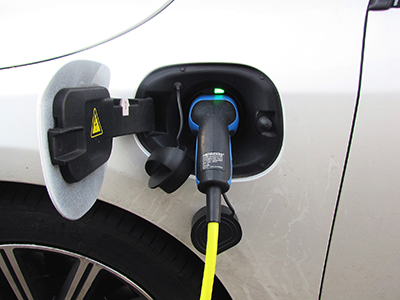
One of the most complex hybrid propulsion systems is the plug-in hybrid. The electric motor installed by the manufacturer is a powerful one, and the battery has a larger capacity. Therefore, a plug-in hybrid, abbreviated PHEV, will be able to run 100% electric for a longer distance. On average, a modern PHEV can travel about 50 kilometers on a single charge. The batteries can be charged from an external socket, but they are also recharged by the gasoline engine or during braking, just like a full-hybrid.
However, a PHEV will be heavier (battery + electric motor) and brings both pluses and minuses from both worlds (cars with internal combustion engines and electric cars). At the same time, the complexity of the system makes the final price of the car higher than that of a gasoline engine with comparable performance. However, thanks to certain government programs (in the case of Romania, the Rabla Plus program), the prices of these PHEVs can still drop by several thousand euros.
With the advent of electric cars, a separate category of hybrids also appeared. They are called cars with Range Extender. Basically, they are electric models, that is, cars that you charge to drive. However, to compensate for a shorter autonomy offered by the batteries, manufacturers have also installed an internal combustion engine with a small cylinder capacity. Its role is as a generator and will never set the wheels in motion. Instead, it will produce electricity for the electric motor.