Everything you need to know about a car’s mileage: a practical guide to checking real km and understanding the odometer
Are you getting ready to buy a used car and want to make sure you’re not being fooled by the mileage? Well, you’ve come to the right place! In this guide, you’ll discover everything you need to know about odometers, how to check real mileage, and how to avoid fraud. You’ll learn how to interpret signs of wear, use technical tools, and turn to experts to make a safe and informed choice. So, get ready to become an expert in checking mileage!
Summary
- Checking the actual mileage of a car is important to avoid fraud and make a safe purchase.
- You can make a first assessment of the authenticity of the mileage by visually checking the wear of the pedals, steering wheel, seats, and other interior components.
- Technical verification methods, such as scanning the car’s electronic system with an OBD tester or consulting the history recorded at the dealership, provide accurate mileage information.
- Red flags for mileage reversal include discrepancies between physical wear and displayed mileage, lack of service records, or discrepancies discovered through official inspections.
- Mileage influences the value of the used car, future maintenance costs, and the risk of buying a vehicle with hidden problems, which is why a careful check is vital.
What is mileage and how does the odometer work?
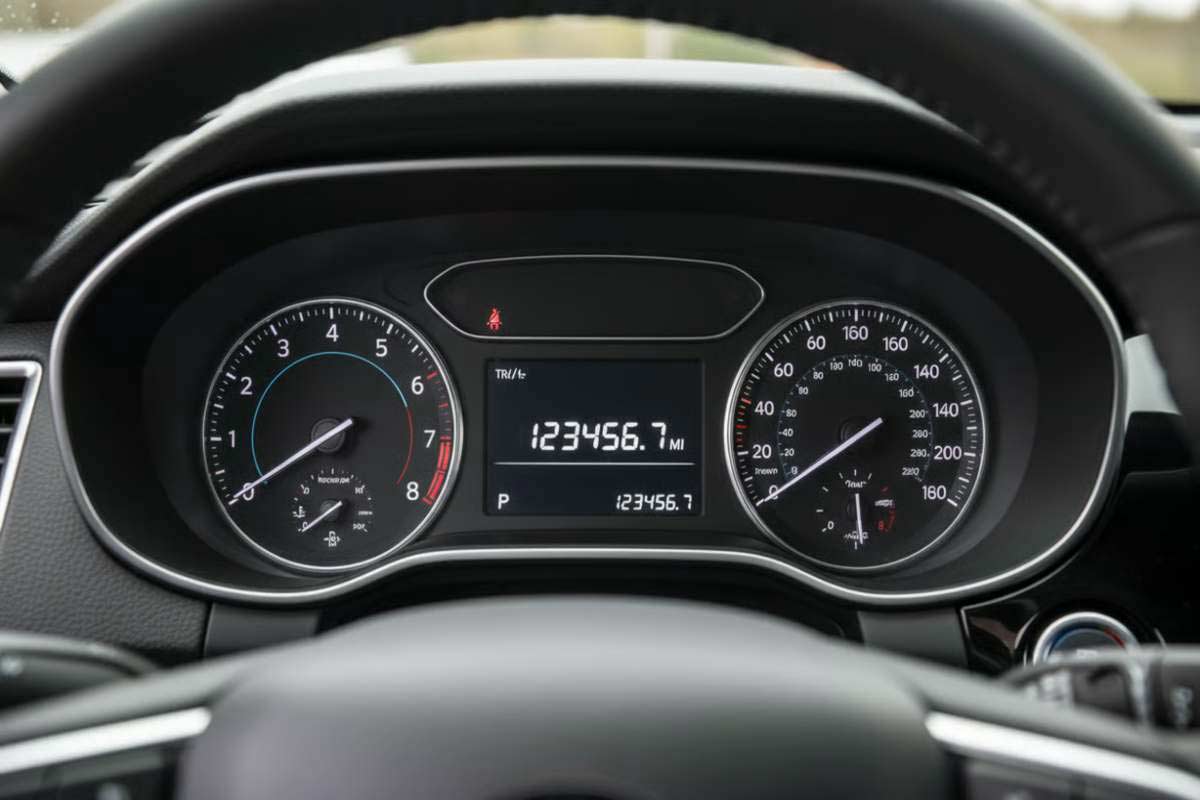
A car’s mileage is the total distance traveled by the vehicle since it was manufactured. This information is recorded and displayed by the odometer, an instrument integrated into the dashboard that constantly monitors the car’s movement. Think of it as a step counter, but for your car.
Mechanical odometer
The mechanical odometer is present in older cars and works based on a system of physical components. Let’s see what are the important aspects:
- It uses a system of gears connected to the transmission via a flexible cable.
- Displays mileage by rotating rollers with numbers (analog reading).
- It is similar in operation to an old clock that measures distance instead of time.
- It is more exposed to mechanical wear and tear and, sometimes, manual handling.
- It may be more difficult to read accurately if the internal elements have worn out.
The mechanical odometer offers a direct, classic method of measuring kilometers, but can be more vulnerable to wear and tear and modification.
Digital odometer
Standard in modern vehicles, the digital odometer integrates electronic technology for increased control and accuracy. Here are the key elements:
- It uses electronic sensors that detect wheel rotation.
- Transmits information to the car’s on-board computer.
- It calculates the distance traveled and displays it on a digital screen (electronic and precise reading).
- Stores mileage data in the vehicle’s internal memory.
- Similar to an integrated GPS that “remembers” every trip you take.
The digital odometer brings increased accuracy and additional security, reducing the risk of physical manipulation and providing a clear record of mileage.
Regardless of its type, the odometer gives you a real picture of the use of the car and the degree of wear of the mechanical components. A high mileage can signal the need for more frequent maintenance interventions or even the replacement of certain parts. Understanding how both types of odometers work helps you correctly assess the condition of a used car and verify the authenticity of the kilometers displayed.
Free real km check – Visual identification methods
You can check the actual mileage of a car at no cost, simply by carefully examining certain visible components. These visual checks can help you discover if there are any discrepancies between the displayed mileage and the physical condition of the vehicle, thus giving you the first signs of possible manipulation.
Checking direct contact components
An important first step is to carefully inspect the elements you use daily while driving. These components are faithful witnesses to the real wear and tear of your car.
- Examine the pedals for excessive wear. If the pedals are very worn at a low declared mileage, it could indicate odometer tampering.
- Checking the steering wheel for signs of dullness or shiny material, signaling many kilometers traveled.
- Observing the gearshift, as obvious signs of wear do not match low mileage.
By evaluating these parts considered the driver’s “calling card” you can get a first idea about the reality of the displayed mileage. If the wear is disproportionately high compared to the number on the odometer, there is serious reason for suspicion.
Analysis of the interior and exposed exterior components
A second stage involves extending the inspection to other areas of the car, to discover clues that don’t lie.
- Check the condition of the upholstery and driver’s seat for signs of intense wear, deformations or scratches that betray prolonged use.
- Analysis of the armrests, ignition or key for signs of frequent use heavy wear does not correspond to low mileage.
- Observation of tires and rims: original tires in too good condition at high mileage raise questions, and the presence of tires from different manufacturers or uneven wear may suggest hidden problems.
- Aesthetic evaluation of headlights and taillights scratches, cracks, or a tired appearance should not appear on a car with few kilometers.
The condition of the interior, tires, or exterior lighting can tell a lot about how much use the vehicle has actually had. Discrepancies between the condition of these components and the odometer readings are always worth investigating further.
Therefore, these free visual inspection methods do not provide absolute proof, but they do provide solid arguments to continue or postpone the purchase process. Any visible discrepancy between the condition of the car and the displayed mileage should arouse your desire to investigate further with technical or professional methods.
Technical verification of real kilometers: tools and practical steps
Technological advancements have made checking a vehicle’s real mileage within the reach of any informed buyer. Here’s how these modern methods work in detail:
Diagnostics with the OBD tester
The on-board computer (ECU) constantly records data about the vehicle’s behavior, including mileage. By connecting an OBD (On-Board Diagnostics) tester to the dedicated port, usually located under the dashboard, a specialist has access not only to the current mileage value, but also to other important data such as errors, maintenance logs or service intervals.
A major advantage is that the car’s electronic memory is difficult to modify without obvious traces, unlike a mechanical or even digital odometer.
If there are differences between the mileage displayed on the dashboard and that stored in the electronic memory, this is a clear signal of possible fraud. Basically, OBD scanning is equivalent to consulting the car’s digital “logbook”.
Online check in the RAR database
The Romanian Automobile Registry (RAR) facilitates the verification of the official mileage recorded at the Periodic Technical Inspection (ITP). As a rule, at each technical inspection, the mileage is noted and entered into the national database.
Anyone can access this information by entering the registration number or body series on the RAR portal or even by requesting an extract directly at the counter.
This way, you can see if your current mileage follows a logical progression from previous readings or if there are unjustified decreases, a sign of manipulation. Basically, this online service plays the role of an official “health file” transparent and accessible to anyone.
Recommendations for efficient technical checks
- Check in person or request a written report after the OBD scan.
- Request and compare the service history from the dealership with the data in the physical service book or invoices.
- Take advantage of the MOT database and look for chronological inconsistencies in mileage.
- Rely on the advice of an automotive specialist for the correct interpretation of technical reports.
By combining these technical methods, you have a much greater chance of detecting fraud attempts and making a purchase in complete safety. In the digital age, information and multiple verification are the key to purchasing a used car without surprises.
How to identify mileage reversed? Warning signs
Spotting a car with reversed mileage requires increased attention to detail and the application of multiple verification methods to uncover potential fraud. Those planning to buy a car should be aware of these risks to avoid being fooled.
Physical signs of odometer tampering
Observing worn components versus the displayed mileage may indicate a problem.
- Excessive wear on the pedals, steering wheel, gearshift or seats, inappropriate for low mileage
- The natural lack of uniformity between the well-maintained exterior and the frequently used elements of the interior
- Poor alignment of numbers on mechanical odometers or signs of wear
Analyzing these elements provides valuable visual clues about the authenticity of the mileage.
Technical and documentary checks
A technical approach and analysis of documentation increases the degree of safety in identifying manipulation.
- Incomplete service history, missing inspections or suspicious repairs at low mileage
- Discrepancies between on-board mileage and electronically stored mileage, obtained through OBD
- Comparison with historical ITP data or official manufacturer databases
Using these checks provides a more accurate perspective and can confirm or deny suspicion of fraud.
Combining visual clues with technical and documentary ones is essential for correctly identifying cars with reversed kilometers and avoiding traps in the used car market.
Mileage check at dealerships and specialized services
Professionally checking a car’s real mileage becomes essential when you want to avoid unpleasant surprises and make an informed decision. There are two main options: checking at the dealership and using specialized car history checking services.
Checking at the dealership
Car dealerships use direct access to manufacturers’ databases to obtain the complete history of the vehicle.
- Check the mileage at every service and repair.
- Providing the VIN number generates a detailed report with full history.
- Ideal for cars maintained only in the authorized network.
Thus, you receive the security of data verified directly by the manufacturer.
Specialized car history check services
Specialized companies offer complex reports, obtained online, based on the VIN number.
- Reports cover mileage, previous owners, accidents, and insurance history.
- They are available online, quickly and for a fee.
- Wide range of data from international sources.
These services give you a complete picture of the car’s history and associated risks.
Therefore, a professional check, either at the dealership or through specialized services, helps you avoid purchasing a car with hidden problems. Data security and expert analysis are the key to a correct decision.
The importance of mileage in evaluating a used car
When evaluating a used car , mileage plays a crucial role, providing valuable information about both the vehicle’s value and potential maintenance costs. Accurate mileage helps you make informed decisions and avoid unexpected expenses.
The impact of mileage on market value
Low mileage directly influences the resale price and attractiveness of the car.
- Low mileage keeps the market value high.
- High mileage leads to rapid depreciation.
- Verifying the authenticity of mileage prevents overpayment for overvalued cars.
So, actual mileage is the key to negotiating correctly and avoiding unfair pricing.
Mileage and maintenance costs
Mileage indicates the state of wear and tear and future service costs of the vehicle.
- High mileage requires more frequent maintenance interventions.
- Proper records show whether the inspections were done on time.
- Fraudulent mileage manipulation can hide serious problems.
Thus, careful analysis of mileage ensures the purchase of a car without hidden defects.
In short, the importance of checking mileage cannot be underestimated, being essential for the safety of your investment.
In conclusion, before you get excited about your new car purchase, make sure you check the mileage carefully. Don’t just rely on the exterior appearance or the seller’s promises. Use all the methods presented, from visual inspection to specialized services, to get a clear picture of the car’s history.
Remember that an initial investment in a thorough mileage check can save you much higher costs in the long run. Be vigilant, be informed, and take your time to make a decision. This way, you can drive with confidence and enjoy your new car without worry.